



Kenya is putting billions of shillings into efforts to save mothers and newborns, but the latest population data shows the country still faces a steep challenge in reducing preventable deaths.
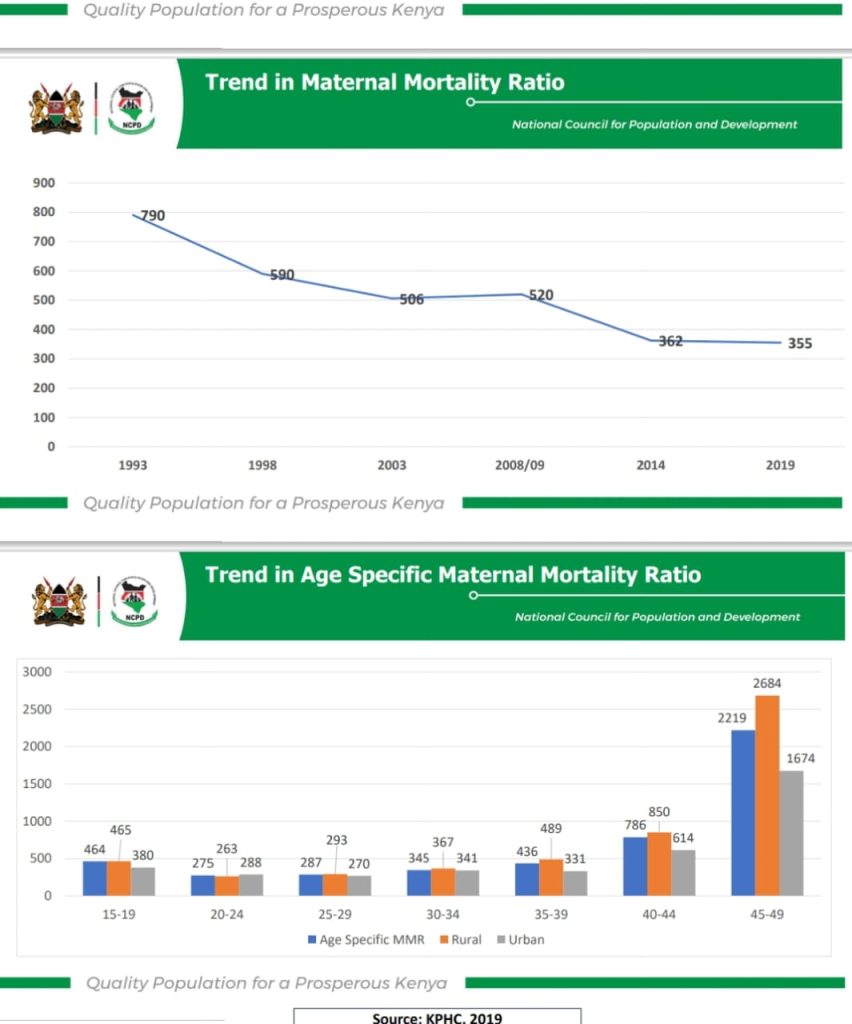
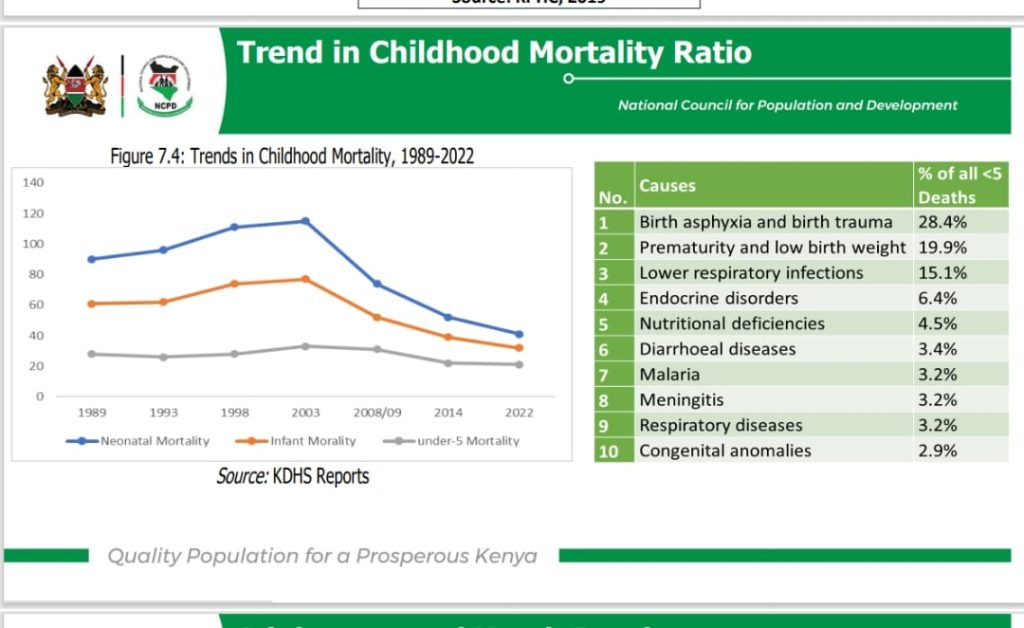
The Kenya Population Situation Analysis Report 2025 conducted by the National Council for Population and Development (NCPD) paints a troubling picture, Maternal mortality remains high at 355 deaths per 100,000 live births, five times above the Sustainable Development Goal target of 70. In some counties, the rate is even higher than 500.
The report also shows that many deaths among children under five are preventable.
“Most under five deaths are preventable, mainly caused by birth complications, prematurity, pneumonia, diarrhea and malnutrition,” Part of the Report read.
ALSO READ:National Assembly Approves County funding bill to strengthen community healthcare and devolution
These figures point to a wider challenge for Kenya’s health system. progress in maternal and child survival is not being experienced equally across the country.
For a woman facing complications during pregnancy or childbirth, where she lives can still determine how quickly she reaches skilled care, whether blood is available, whether an emergency theatre is functioning and whether an ambulance can get her to a higher-level facility in time.
For a newborn, survival can similarly depend on whether a health facility has the staff, equipment and medicines needed during the critical first hours of life.
A county-level crisis
The Population Situation Analysis Report highlights large differences between counties, reflecting unequal access to quality healthcare, skilled health workers and emergency services.
That is where the maternal mortality crisis becomes a major devolution issue.
Health services are largely delivered through county governments, meaning county decisions on staffing, equipment, health facilities, ambulances and emergency referrals can directly affect the chances of a mother or child receiving timely care.
The national maternal mortality ratio of 355 deaths per 100,000 live births is already far from the SDG target. But counties recording rates above 500 show that the burden is not spread evenly.
“County governments through health departments to operationalize ambulance services and referral protocols in ASAL counties,”
The report recommends directing maternal health funding and resources towards counties with the highest maternal mortality rates.
“MoH to direct maternal health funding and resources to counties With The highest MMRs,”
That recommendation raises an important question for both the national and county governments, are resources being concentrated where the need is greatest?
“MoH to expand national initiatives such as Linda Mama now Linda Jamii and free Maternity services in underperforming counties,”
Billions committed
Kenya has now renewed its commitment to ending preventable maternal and newborn deaths through the Every Woman, Every Newborn, Everywhere initiative, with interventions being accelerated in 26 high-burden counties.
The Government says it is investing about KSh12.5 billion to improve maternal and newborn survival.
This was said at the inaugural Kenya Health Summit 2026 held at the KICC.
The ministry of health said the funding includes KSh4 billion for delivery and essential newborn care, KSh1 billion for lifesaving maternal and newborn commodities, KSh2.5 billion for family-planning commodities and KSh5 billion annually to recruit 5,000 nurses.
“The Government is investing approximately KSh12.5 billion to improve maternal and newborn survival,” The Ministry of health said.
It was also revealed that The Social Health Authority has also reimbursed more than KSh17 billion for maternal health services since its inception.
“Through the six-month Rapid Results Initiative, KSh2 billion has been allocated to SHA for maternity and newborn care, more than 300 health workers have been trained, and maternal and newborn emergency simulation drills have been conducted across 29 counties. Newborn-care mentorship is also underway in 13 counties to strengthen the quality of care provided in health facilities,”
The investment is significant but the more important test will be whether it changes what happens inside maternity wards and during emergencies.
ALSO READ:New cancer support centre brings wider care closer to Coast patients
Will the additional nurses reach facilities facing staff shortages?
Will emergency maternity units have enough blood, medicines and supplies? Will ambulances get mothers to hospitals quickly enough when complications arise?
And, perhaps most importantly, will counties with the highest maternal and child mortality receive the greatest attention?
What success can look like
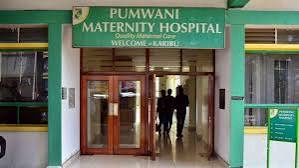
Pumwani Maternity Hospital offers a glimpse of what sustained investment can achieve.
The hospital handles between 15,000 and 18,000 deliveries every year according to the ministry, yet sustained investment in maternal healthcare has contributed to nearly zero maternal deaths over the past 18 months.
“At Pumwani Maternity Hospital, which handles between 15,000 and 18,000 deliveries annually, sustained investment in maternal healthcare has contributed to nearly zero maternal deaths over the past 18 months,” The health ministry revealed at the health summit.
Its experience raises a difficult but necessary question if a busy public maternity hospital can sharply reduce maternal deaths, what would it take to achieve similar results in counties where women remain at far greater risk?
The answer is unlikely to lie in one intervention.
Maternal and newborn survival depends on several parts of the health system working together. A woman experiencing severe bleeding after delivery may need skilled staff, blood, medicines, a functioning theatre and rapid emergency care.
A premature newborn may require specialized equipment and trained health workers within minutes of birth.
A breakdown at any point can be fatal.
The emergency gap
Kenya is now strengthening emergency referrals through the SHA 922 Lifeline and the National Ambulance Dispatch Centre the health ministry says.
More than 300 health workers have also been trained under a six-month Rapid Results Initiative, while maternal and newborn emergency simulation drills have been carried out across 29 counties.
Newborn care mentorship is underway in 13 counties.
The Government also adds that it has also introduced real-time Maternal and Perinatal Death Surveillance and Response and Rapid Results Initiative dashboards to improve reporting and monitoring.
Monthly performance reviews are expected to help health teams identify gaps and respond before similar deaths occur.
This is an important shift, For years, maternal and newborn deaths have often been discussed after they happen. The new approach aims to use data to identify problems earlier and prevent another family from experiencing the same loss.
But data and dashboards alone will not save lives.
ALSO READ: NCPD: Kenya’s Urban Population Is Heading Towards 27 million: Are Counties Ready for the Pressure?
The information must lead to action in counties. If a death review identifies delayed referrals, there must be a working ambulance system.
If it shows shortages of blood or medicines, supplies must reach the facility. If staff shortages are putting mothers and newborns at risk, counties must deploy health workers where they are needed.
The unfinished task
Kenya has made progress in reducing mortality over the years, but the Population Situation Analysis Report makes it clear that preventable deaths among mothers, newborns and children remain unacceptably high.
The country is now investing more money and strengthening emergency systems. The real challenge is whether those efforts will reach the women and children facing the greatest risk.
The next measure of Kenya’s maternal and child health reforms should therefore not simply be how much money has been committed or how many programmes have been launched.
It should be whether a woman in a high-burden county is more likely to survive pregnancy and childbirth than she was before.
It should be whether a newborn born prematurely gets the care needed to survive.
And it should be whether preventable deaths among children under five begin to fall in the counties where the burden remains highest.












Leave a Reply