



Kenya’s counties are set for a major financial boost in the 2026/27 financial year following the approval of the County Governments Additional Allocations Bill, 2026, opening the door to billions of shillings for programmes ranging from community healthcare and affordable housing to agriculture, water and climate action.
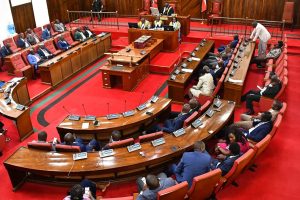
The Bill, which was considered by the House with amendments proposed by the Budget and Appropriations Committee chaired by Samuel Atandi, seeks to enhance service delivery by providing counties with conditional additional allocations from both the national government and development partners channeling 72.26 billion shillings.
ALSO READ: Power poles, but no power: How Ndhiwa’s electricity gap is holding back development
While the passage of the Bill is an important parliamentary step, its real significance lies beyond the allocations approved on paper.
For residents across the 47 counties, the key question is whether the additional funds will translate into better services.
The revised 2026/27 allocations include funding for Community Health Promoters, the transition of Universal Health Coverage workers to permanent and pensionable terms, county headquarters, affordable housing committees and County Aggregation and Industrial Parks.
Counties are also set to benefit from development partner-funded programmes covering health, agriculture, climate resilience, water and urban development.
The Bill is a major investment in community healthcare, with Ksh 8.61 billion allocated to transition Universal Health Coverage (UHC) workers to permanent and pensionable terms, while Ksh 3.23 billion has been set aside to support Community Health Promoters (CHPs) across the country.
Could the funding strengthen community healthcare?
Health is among the biggest beneficiaries of the additional allocations.
The Bill provides billions of shillings to support Community Health Promoters and the transition of UHC workers to permanent and pensionable employment.
For years, counties have faced concerns over shortages of health workers and the uncertainty surrounding the employment of UHC staff. The additional allocation for their transition could offer greater job security and help counties retain personnel.
At the same time, continued support for Community Health Promoters could strengthen healthcare at the household and community level.
Community Health Promoters play a role in health education, disease prevention and linking households with health facilities. Stronger support for the programme could help counties place greater emphasis on prevention rather than relying mainly on treatment after patients reach hospitals.
The Ministry of Health had earlier said UHC workers’ contracts were extended to June 2026 as counties prepared for their transition to permanent and pensionable terms.
A potential boost for services beyond hospitals
The additional allocations are not limited to healthcare, Counties are also expected to receive support for agriculture, climate resilience, urban development and water projects through programmes financed by development partners.
This could be particularly important for counties facing the effects of climate change, including prolonged droughts and floods.
Funding for locally led climate action could give county governments more resources to invest in projects designed around local needs, while agricultural programmes could support efforts to improve food production and strengthen value chains.
Urban areas could also benefit from additional investment in infrastructure and informal settlement improvement as counties continue to face pressure from rapid population growth.
Housing and industrial parks also in focus
The 2026/27 allocations include funds for County Rural and Urban Affordable Housing Committees, as well as the construction of County Aggregation and Industrial Parks.
The industrial parks are expected to support value addition and provide counties with infrastructure that could strengthen local economies.
However, their success will depend on more than the construction of physical facilities.
Counties will need to ensure that the projects attract investment, support local producers and create opportunities for residents.
Similarly, the impact of affordable housing funding will depend on how effectively county governments plan and implement their housing programmes.
The difference between more money and better services .Additional allocations are not the same as the equitable share that counties receive annually.
ALSO READ: NCPD: Kenya’s Urban Population Is Heading Towards 27 million: Are Counties Ready for the Pressure?
Much of the money comes with specific conditions, meaning counties must use it for the programmes for which it has been allocated.
The 2026/27 Budget Policy Statement proposed Ksh 75.7 billion in additional allocations to county governments, including funds from the national government’s share of revenue and financing from loans and grants provided by development partners.
This means the availability of funds alone will not guarantee better services.
Counties will still need to plan projects, meet funding conditions, complete procurement processes and ensure the money reaches its intended programmes.
Delays in releasing or absorbing funds could affect implementation and slow down projects.
The National Assembly has approved the Bill, but the real test now moves to county governments.
As the funds begin to flow, counties will be under pressure to show how the additional allocations are improving the lives of the people they are meant to serve.
The success of the funding will ultimately be measured not by the billions allocated, but by the services residents experience on the ground











Leave a Reply