



Questions have been raised over how Nairobi County is approving buildings after it emerged that the Urban Planning Technical Committee, a key body involved in development approvals, has not been reconstituted since its term expired in October last year (2025).
The committee is renewed every three years and brings together technical expertise from several institutions, including the Ministry of Health, Nairobi City Water and Sewerage Company, the Institution of Engineers of Kenya and the Architectural Association of Kenya, among other professional bodies.
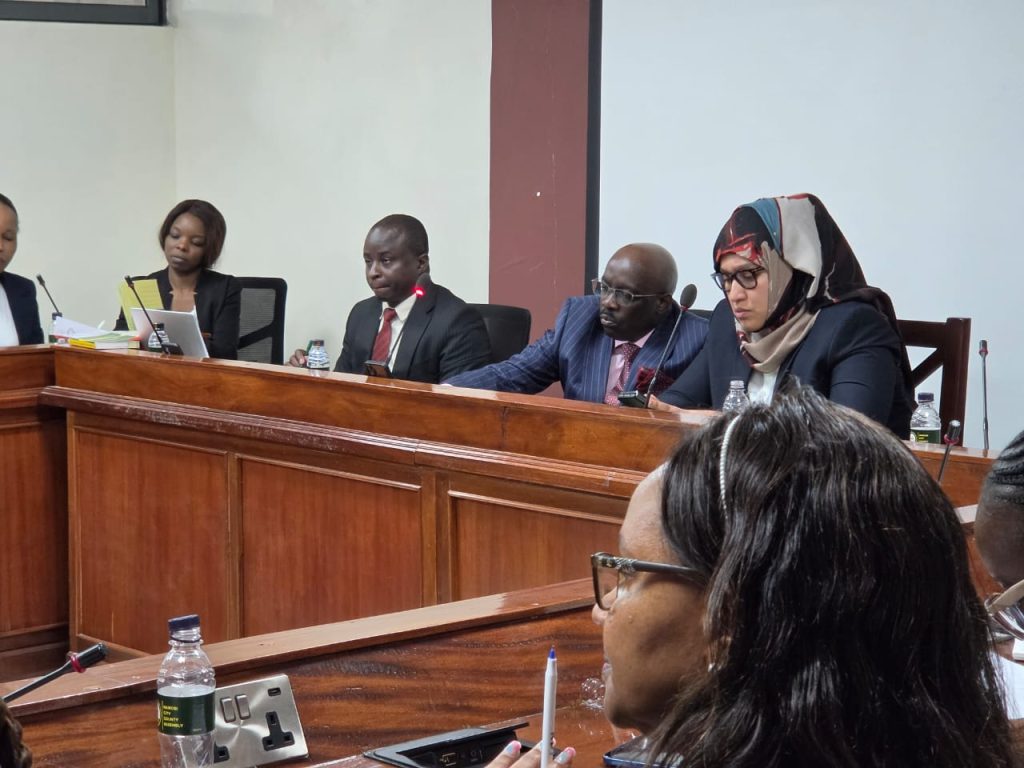
However, professional bodies appearing before the Nairobi County Assembly planning committee on Tuesday said there is currently no representation from the professional bodies in the technical committee.
The development has raised questions about the process through which building and development applications have been scrutinised and approved since the committee’s term ended.
Rather than simply being a question of individual building approvals, the issue points to a wider gap in Nairobi’s development control system, who provides the technical scrutiny required before construction projects are cleared?
ALSO READ:What is driving the cost of Turkana’s hides and skins trade?
A committee that has not been renewed

The Urban Planning Technical Committee is expected to bring together professionals from different fields whose expertise is relevant to development control.
Its membership allows planning applications to be considered from several perspectives, including public health, engineering, water and sewerage infrastructure and architecture.
Professional bodies told the county planning committee that the failure to reconstitute the body has left a gap in the approval process.
“We do insist that the urban planning technical committee has to have the associations well represented. We urge the county to facilitate the operation of this committee in development control in Nairobi, especially listening to professional associations,” Architectural Association of Kenya vice-president Architect Brenda Nyawara said.
The concerns come at a time when Nairobi continues to experience rapid construction, with new residential, commercial and mixed-use developments emerging across the city.
“Reason why buildings are collapsing, no compliance on the ground is because the committee is not able to work to full capacity,”
For residents, the question goes beyond paperwork. Technical scrutiny is intended to help determine whether proposed developments meet planning, safety, infrastructure and other requirements before construction proceeds.
The absence of the committee therefore raises questions about how that scrutiny has been carried out over the past year.
ALSO READ:Busia turns to cassava and edible oil crops to feed Nasewa industrial park
Policy uncertainty adds to the problem
The concerns over the committee come alongside uncertainty over the rules governing development control in Nairobi.
The Nairobi City County Development Control Policy 2026, which was intended to provide a framework for managing development in the city, is currently not being implemented after its enforcement was halted by the courts following a legal challenge.
County officials told the committee that the court had paused implementation of the policy.
In the meantime, people in the construction sector have been directed to refer to the 2021 draft development control policy.
But the 2021 document is itself yet to be formally approved, creating another layer of uncertainty for professionals and developers.
Committee chair Geoffrey Majiwa reiterated that the construction sector should rely on the 2021 draft policy while the 2026 policy remains suspended.
For professionals working on development applications, however, the situation has created confusion over which framework should guide planning and construction decisions.
‘We need an urgent solution’
Architectural Association of Kenya vice-president Architect Brenda Nyawara said the suspension of the 2026 policy had contributed to uncertainty within the industry. The professional bodies want the county and other relevant stakeholders to find an urgent solution to the policy impasse.
The concern is that prolonged uncertainty over the rules governing development control can make it difficult for professionals, developers and residents to know what standards are currently applicable.
“This policy has to be in place to guide planning. We cannot see buildings collapsing then we end up asking who guides how tall buildings go up,” Nyawara added.
The policy was expected to provide a framework for controlling development and addressing some of the challenges associated with unplanned and poorly controlled construction in Nairobi.
It’s suspension has therefore left the sector looking for clarity as the legal process continues.
With the lack of the development committee now creates a window of corruption because we not following the law, we are not ensuring the public is safe guarded as well. People are dying from buildings collapsing and yet there are laws than need to be updated especially the development control policy,”
Digital approval system under scrutiny

The Nairobi Planning and Development Management System also came under scrutiny during the meeting.
The digital platform was introduced to make the development approval process easier and more efficient by allowing applications and related processes to be handled electronically.
Professional bodies, however, complained of delays and difficulties with the system.
Engineer Grace Muthoni Kagondu of the Institution of Engineers of Kenya alleged that the system appeared to have been allowed to fail, saying delays were affecting professionals who depend on it to process development applications.
“We feel it is deliberate for the portal to be down. it could be an officer or officers deliberately slowing down the process so that you have to come to city hall or make calls to get an approval from the city county ,” Muthoni said.
She called for an overhaul of the system to address the problems being experienced by users.
The concerns raise another question for Nairobi’s development control system, even where the relevant technical structures and policies are in place, can applications be processed efficiently if the digital platform itself is not working as expected?
ALSO READ:Education reforms put spotlight on funding gaps facing vulnerable learners in Nyandarua and Laikipia
County raises concerns over professional bodies
Majiwa, however, pointed to divisions among professional bodies over the proposed overhaul.
He suggested that some professionals could be opposed to changes to the system because they may be benefiting from irregularities within the existing arrangement.
The claim adds another dimension to the debate over Nairobi’s development approval process, with disagreements emerging not only over the performance of the system but also over the interests surrounding it.
The competing positions point to the need for greater clarity over how the approval system operates, who has access to it and where responsibility lies when applications are delayed or irregularities are alleged.
The questions surrounding Nairobi’s development approvals now extend beyond the technology used to process applications.
The county faces pressure to address the absence of a properly constituted Urban Planning Technical Committee, provide clarity on the policy framework currently guiding development control and resolve the problems affecting the digital approval system.













Leave a Reply