


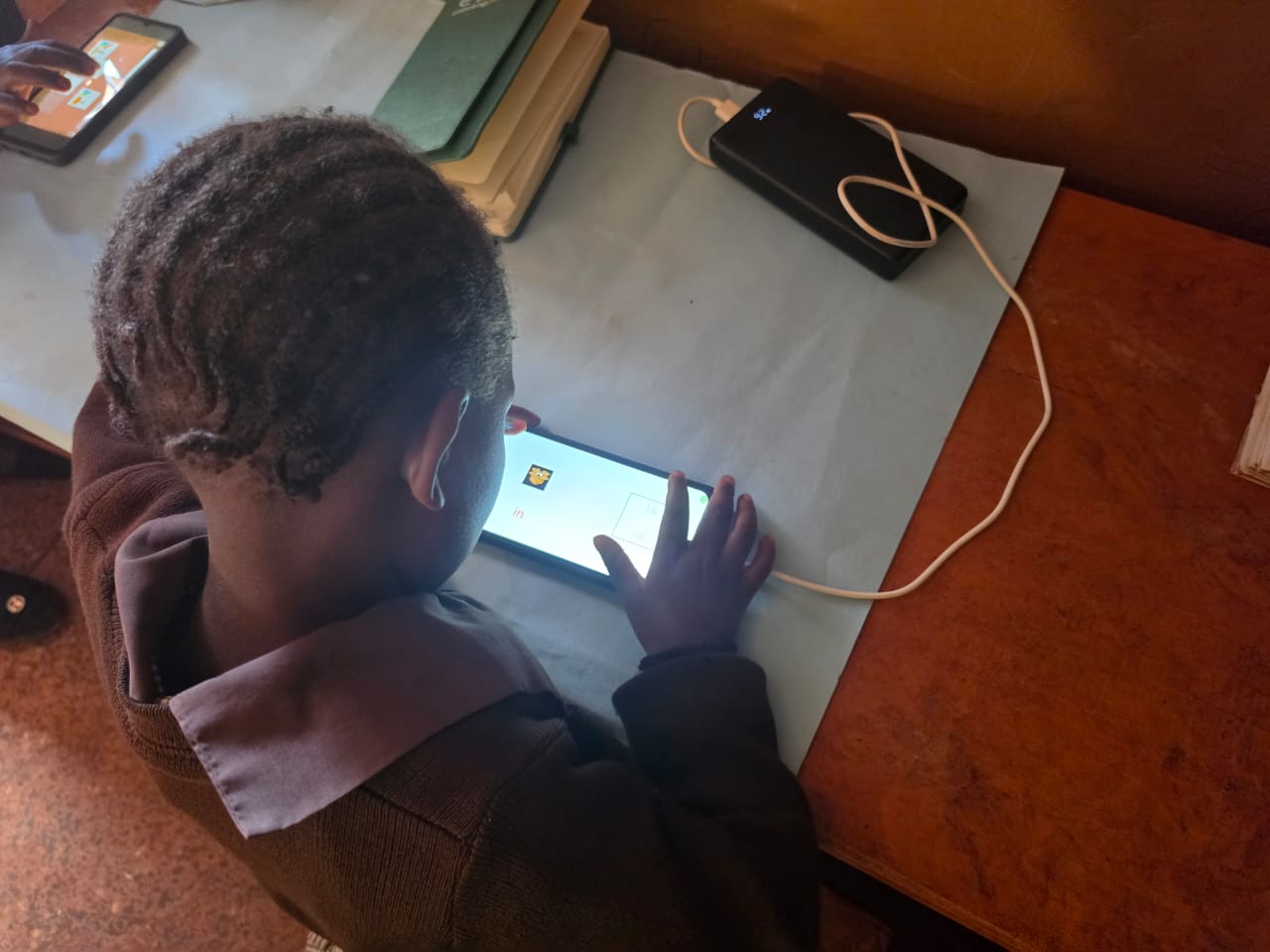
For decades, teaching young children has largely depended on a teacher, a chalkboard, books, pencils and plenty of repetition.
But now at Ng’araria Primary School in rural Murang’a County, some of that is changing, but not disappearing.
In the Early Childhood Development and Education (ECDE) classroom, children use digital tablets to count, pronounce words, solve problems and explore new concepts.
But alongside the devices are exercise books and pencils. The teacher still picks up a piece of chalk to write on the blackboard, while learners continue putting pen to paper.
It is a classroom where traditional teaching methods and technology exist side by side.
As Kenya marks World Teachers’ Day on 5 October, the experience at Ng’araria does offer a glimpse into how teachers are adapting to digital learning while also ensuring children do not lose the basic skills they need.
ALSO READ:Who is approving Nairobi’s buildings? Questions emerge over lapsed planning committee
The tablet is another teaching tool
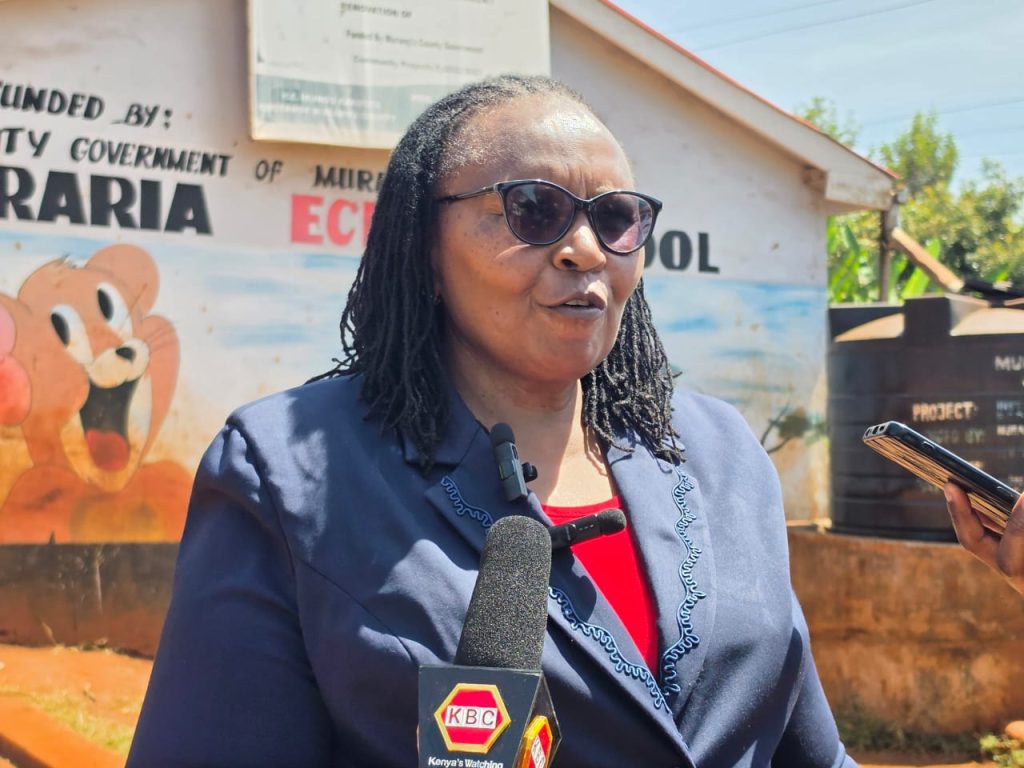
Murang’a County ECDE Learning Director Catherine Mwaura says the county began implementing the EIDU digital learning programme around 2022, initially as a pilot in selected sub-counties.
The programme has since expanded to all nine sub-counties and 35 wards, covering 650 ECDE centres and more than 1,100 teachers.
Mwaura says the digital content has been very useful in areas such as early language and numeracy.
“At the foundational level, especially with language, we usually have challenges with sounds and phonetics,” she said while addressing journalists in Murang’a.
The digital lessons allow children to hear sounds and words repeatedly while giving teachers another way of explaining concepts.
But the tablet has not replaced the blackboard or exercise books.
“Eidu has really helped us in training our teachers on how to use this gadget. This as a county is a great milestone. For our learners being able to use these devices at this level. It is an exposure to them to see what technology can do, how we can use it to enhance our learning, and especially in language and arithmetic,” She said.
At Ng’araria, learners still write in their books and use pencils to practise handwriting. Teachers continue using the blackboard to demonstrate concepts and guide children through their work.
The approach is deliberate, technology is being used to add to classroom instruction, rather than take over every part of it.
Keeping the pencil in the classroom
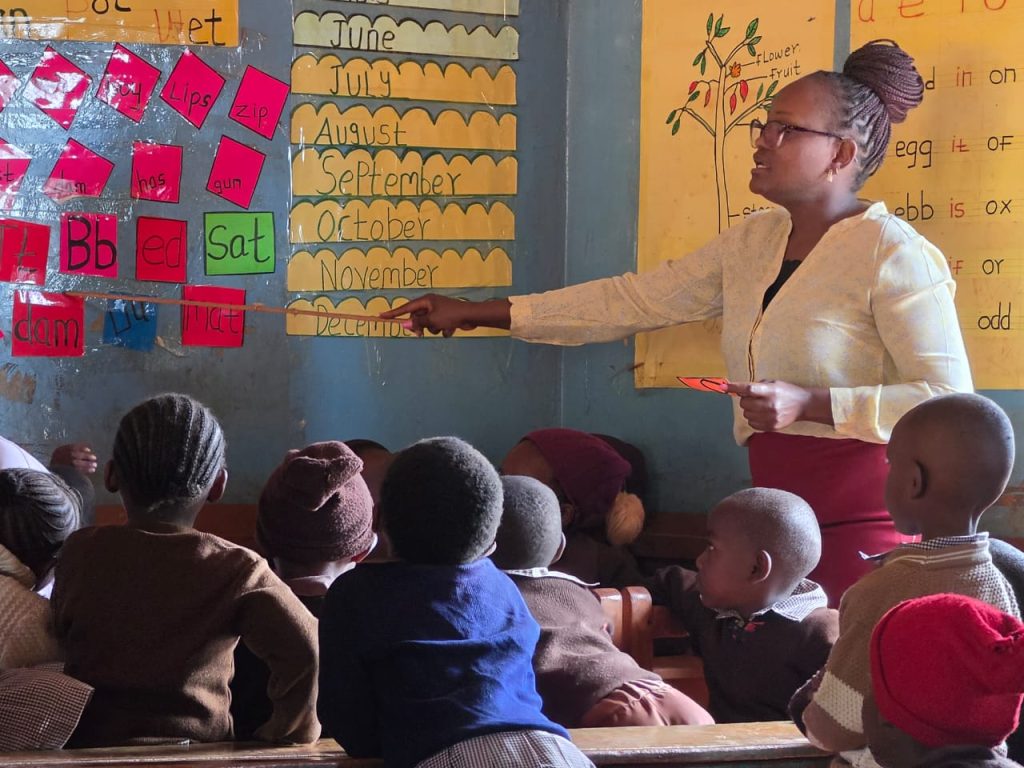
ECDE teacher Beth Ruguru Kimani says the combination of digital and traditional learning has made her lessons more engaging.
The children may first encounter a word, number or concept on a tablet, but they also have an opportunity to write, repeat and practise it using their books. This is important at an age when children are still developing basic handwriting and fine motor skills.
Kimani says she has seen improvements in pronunciation among some learners who previously struggled to say certain words.
“The EIDU App, inatuonyesha wale watoto wako na changamoto.. kwa hivyo tunawachukua kwa darasa na kuwapatia extra activities ndio waelewe,”
“The traditional way of teaching had some challenges, so i feel teaching with technology is really helping us.The device has same activities am teaching in class….it has been formatted such that it is strictly educational, Foe example if i was teaching on shaping a letter for PP1 class, when we go to the device, we will go to the shaping of the letter section where the child prctices, so the technology is really helping us a lot,” The teacher added.
She also says the interactive lessons have encouraged more children to participate.
“The learners find the lessons interesting and practical. More children are willing to attend class because they enjoy learning,” she said.
The technology has also pushed her to think differently about lesson preparation and how she presents concepts.
But when the tablets are put away, the classroom does not go silent.
The blackboard remains in use, exercise books are opened and pencils continue moving across the pages.
ALSO READ: What is driving the cost of Turkana’s hides and skins trade?
A classroom where old and new methods meet
For the learners, the difference is visible.
One moment they are following an interactive activity on a tablet. The next, they are writing in their books or responding to questions from the teacher.
The teacher remains responsible for guiding the lesson, explaining what the children are seeing on the screen and making sure they understand the concept.
This balance is particularly important in ECDE, where learning also depends heavily on play, interaction, conversation and physical activities.
Digital content can reinforce a lesson, but it does not remove the need for a teacher to observe a child’s progress and respond to individual needs.
What Murang’a says it is seeing
Mwaura says the county has seen improvements that extend beyond regular classroom lessons.
Mwaura pointed to increased participation by ECDE learners in music and drama competitions, activities that require communication and confidence.
She says some learners have progressed to national level competitions.
The county also monitors how the digital devices are being used through its digital dashboard.
Mwaura says Murang’a is among the counties recording high usage of the devices.
The county has allocated 10 million shillings towards the programme, with the cost being shared between the county government and EIDU.
“progressively we will continue increasing the budgetary allocation…..even when EIDU is not there in future we will continue running the program,” Catherine added.
But Catherine acknowledges that funding remains the biggest challenge.
Digital learning requires money not only to provide devices and content, but also to train teachers, maintain equipment and ensure schools have the infrastructure needed to use the technology.
When the power goes off
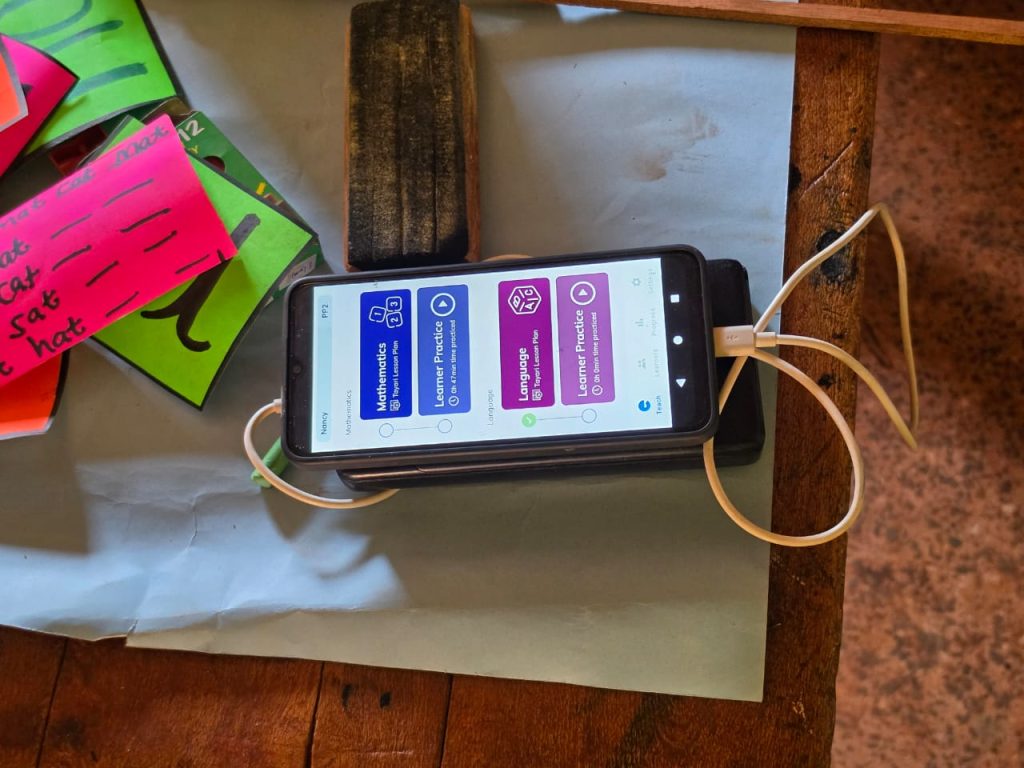
At Ng’araria, the promise of digital learning comes with a practical concern and that is electricity.
Teacher Kimani says access to reliable electricity remains a challenge in some schools and wants greater attention given to the infrastructure supporting digital education.
Additionally Catherine Mwaura is now advocating for digital learning to continue into primary school.
Her concern is that children who become familiar with technology and interactive learning at ECDE level could lose some of that exposure when they move to primary school if similar approaches are not maintained.
She says the national government should consider supporting the expansion of digital learning at primary level and providing counties with the resources required.
Mwaura also wants better coordination among organisations supporting education.
She argues that instead of different donors supporting disconnected projects, they could work towards a common objective while taking responsibility for different areas of need.
ALSO READ:Busia turns to cassava and edible oil crops to feed Nasewa industrial park
The question of sustainability

EIDU Deputy Head of Operations Moses Onjolo says the organisation wants to expand its reach from 32 counties to all 47.
According to EIDU, its platform currently supports about 790,000 learners in Kenya, with 47,445 devices distributed to schools through partnerships with government and development partners.
“The next frontier is sustainability, strengthening government ownership, expanding relevant learning content, supporting teachers and ensuring equitable access, particularly in underserved communities” Onjolo said.
But expansion also raises questions about sustainability.
Onjolo says the next frontier is stronger government ownership, relevant learning content, teacher support and equitable access, particularly in underserved communities.
For counties, this means finding ways to fund and maintain digital learning beyond individual programmes or partnerships.
For teachers, it means acquiring the skills to use technology effectively while retaining the teaching methods that remain essential to early learning.
At Ng’araria, the tablet has not pushed the blackboard out of the classroom.
The pencil has not disappeared. Exercise books are still being filled. Teachers still explain lessons, write on the board, ask questions and correct children’s work.
What has changed is the range of tools available to them.
The experience in Murang’a suggests that the transition to digital learning does not have to mean choosing between technology and traditional teaching.
For young learners, both can have a place.
The challenge is ensuring that teachers have the training, infrastructure and resources to use each tool effectively.
As Kenya marks World teacher’s day, the experience in Murang’a offers a reminder about more than devices infact It is about giving teachers the tools and support they need to help children build strong foundations for the years ahead.










Leave a Reply