


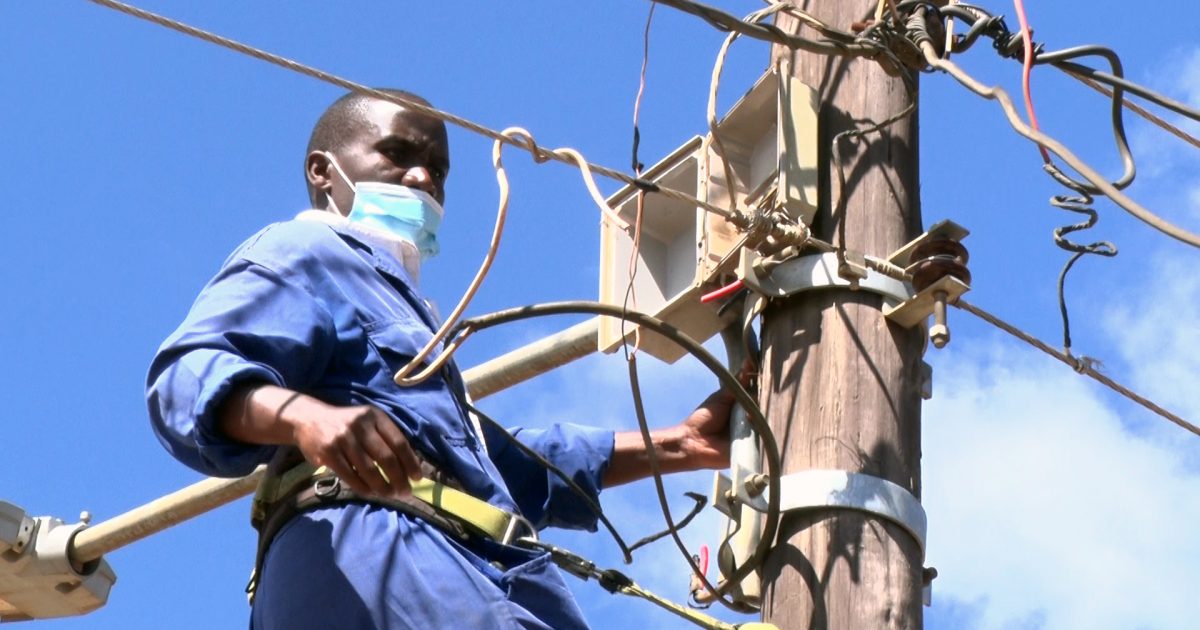
Electricity infrastructure has reached parts of Ndhiwa, but many homes, schools and businesses remain without actual connections.
Electricity poles and cables have been installed in parts of Ndhiwa Constituency in Homa Bay County, but many residents are still waiting for the power they were promised.
The gap between electricity infrastructure and actual household connections has raised concerns over the impact of low power access on businesses, education and economic development in the area.
During an inspection of Last-Mile Connectivity projects, the Senate Standing Committee on Energy found that electricity coverage in Ndhiwa remains significantly low, standing at about 35 per cent.
ALSO READ:NCPD: Kenya’s Urban Population Is Heading Towards 27 million: Are Counties Ready for the Pressure?
This is below Homa Bay County’s expected connectivity level of around 55 per cent by March next year.
The committee, led by Elgeyo Marakwet Senator William Kisang, visited the area to assess the progress of electricity projects and identify the challenges slowing down access to power.
The cost of being without power
The lack of electricity is being felt beyond households.
Senator James Lomenen said businesses that depend on electricity, including welding workshops, were struggling to operate, while some schools visited by the committee had no access to power.
The situation has also left computers supplied to schools lying unused in stores because the institutions cannot power them.
Lomenen questioned how schools in such areas could compete with better-connected institutions elsewhere in the country.
“How can one expect such schools to perform and outshine schools in other areas like Nairobi which have connectivity?” he said.
For an area with active agricultural production, including sugar-cane farming, the lack of reliable electricity also limits opportunities for value addition and the growth of small businesses.
Access to electricity can support processing, storage and other economic activities that allow communities to earn more from agricultural production.
Infrastructure without connections
One of the major concerns raised during the inspection was the presence of electricity infrastructure that has not translated into actual connections for residents. In some areas, poles and cables have been installed, but homes and institutions remain without electricity.
Lomenen described the situation as alarming, arguing that communities should benefit once electricity infrastructure has been brought into their areas.
“What we have witnessed today is really shocking. This region has been totally forgotten in terms of electricity connectivity,” he said.
Kisang said the committee was surprised by the low level of connectivity in Ndhiwa despite the area’s economic potential.
The committee now plans to engage Kenya Power and other relevant agencies over the possibility of allocating more resources to improve electricity access in Ndhiwa.
Kisang said the committee would push for affirmative action to address the low level of connectivity in the sub-county.
ALSO READ:Nairobi County Assembly Vets Machel Waikenda for Nairobi County Secretary Job
Will the Last-Mile programme deliver?
The situation raises questions about the effectiveness of the Last-Mile Connectivity Programme in areas where electricity infrastructure has been installed but households and institutions remain unconnected.
The programme is meant to bring electricity closer to homes and public institutions, particularly in rural and underserved communities.
However, the Ndhiwa case shows that putting up poles and extending power lines does not automatically mean people have access to electricity.
For residents, schools and businesses, the real measure of success is whether electricity reaches the buildings where it is needed.
Rural Electrification and Renewable Energy Corporation Regional Manager Zach Magomere acknowledged that electricity connectivity in Ndhiwa remains low.
He said the corporation was working on a project expected to connect at least 52 homesteads by the end of September.
“We want to assure citizens that by the end of September, we shall have completed this project because we have a contractor on the ground who has begun the works,” Magomere said.
The Senate committee said it would continue pushing for increased funding and the completion of stalled electricity projects in underserved areas.
But the challenge in Ndhiwa is also a reminder that infrastructure should be judged by the difference it makes in people’s lives.
Electricity poles may signal the arrival of a project, but for a business owner unable to operate machinery, a school unable to use its computers or a household still relying on alternative sources of energy, the project remains incomplete.
For Ndhiwa, increasing electricity connectivity could open up more opportunities for businesses, improve learning and support agricultural value addition.











Leave a Reply