


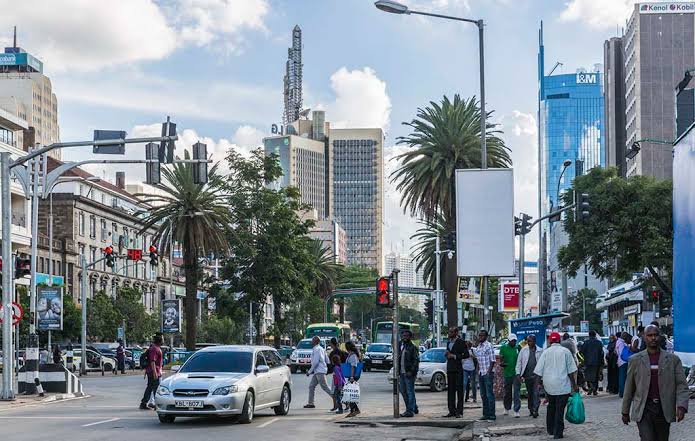
Kenya’s urban population is projected to reach 27 million by 2035, raising fresh questions about whether county governments are prepared to provide housing, water, sanitation, transport and other essential services for the country’s rapidly growing towns and cities.
A new population report has projected a sharp increase in the number of Kenyans living in urban areas, putting county governments at the centre of the country’s next major development challenge.
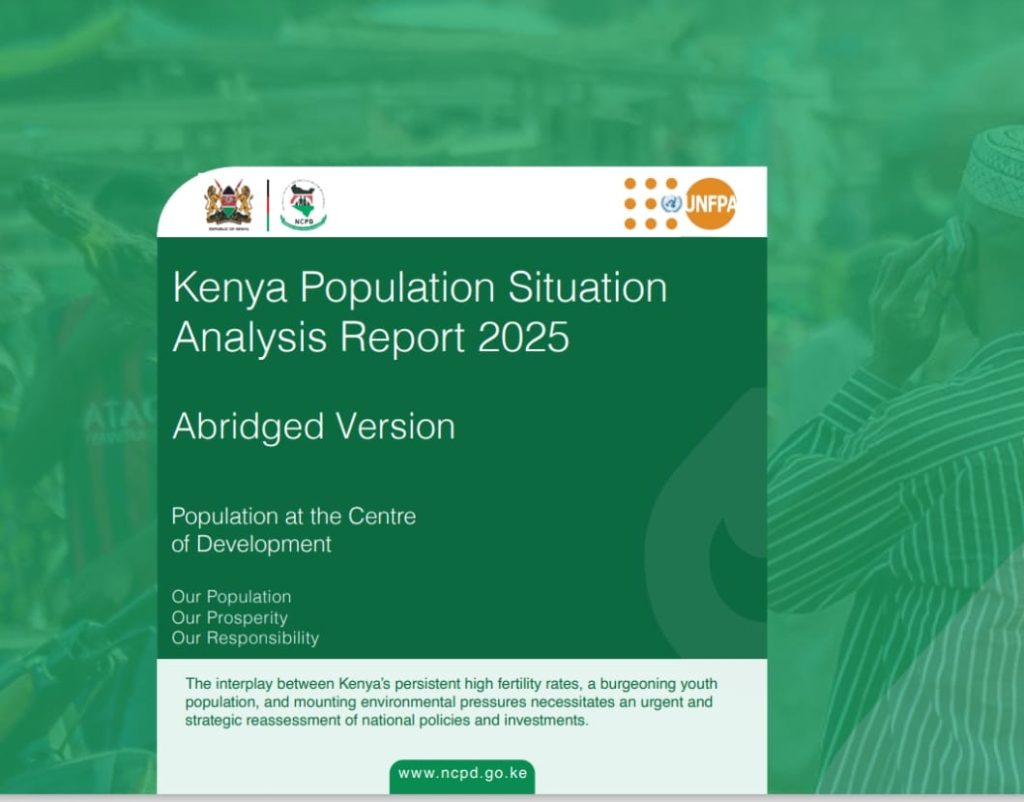
According to the Kenya Population Situation Analysis Report 2025 conducted by The National Council for Population and Development (NCPD), Kenya’s urban population is expected to rise to 27 million by 2035.
ALSO READ:Why Nairobi has gone eight years without a substantive County Secretary
The number of people living in urban areas has grown steadily over the decades, increasing from about 280,000 in 1948 to 1 million in 1969, 5.4 million in 1999 and 14.8 million in 2019.
“The number of urban centres in Kenya has increased In space and time From 34 in 1962, to 47 in 1969, them to 180 In 1999, and to 372 in 2019,” The Report said In part.
The growth is expected to continue as towns expand, migration increases and more areas are classified as urban. For counties, however, the rising population presents a bigger question, can local governments keep pace with the growing demand for services?
Cities are growing faster than services
The report warns that urban population growth in Kenya is increasing faster than the ability of county governments to provide the services needed to sustain healthy living environments.
As more people move into towns and cities, pressure is likely to grow on housing, water supply, sanitation, roads, public transport and waste management.
The challenge is particularly significant because many of these services fall under county governments.
Urbanization can create new economic opportunities, but poorly managed growth can also lead to overcrowding, inadequate housing, pressure on public services and the expansion of informal settlements.
The report notes that urban development in Kenya should focus on reducing the risks associated with rapid urbanisation while taking advantage of the opportunities created by growing towns and cities.
Nairobi and Mombasa offer a glimpse of the challenge
Nairobi and Mombasa counties have already reached a 100 per cent urbanisation rate, according to the report. Their experience offers a glimpse of the pressures that other rapidly growing urban counties could face in the coming years.
Kenya’s major cities are already dealing with traffic congestion, housing shortages, pressure on water and sewerage systems, waste management challenges and growing informal settlements.
The report shows that urban centres across the country have expanded significantly over the years. Kenya had 34 urban centres in 1969, but the number had risen to 180 by 1999 and reached 372 by 2019.
As more towns grow, county governments will have to decide whether to invest in infrastructure early or wait until services are overwhelmed.
“Kenya’s Urban growth comes From rising birth Rates, city boundary expansion, new Urban classifications, and migration, while most Urban Residents Still Rely on Rental housing Rather than home ownership,” the report added.
ALSO READ:How did Kiambu double its own-source revenue without increasing taxes?
Housing remains a major concern
Rapid urbanization is also expected to increase demand for housing.
The report shows that many urban residents continue to rely on rented homes, while the expansion of cities has not always been matched by adequate and affordable housing.
This leaves counties facing the difficult task of planning for growing populations while addressing existing housing shortages.
Without proper planning, more residents could be pushed into informal settlements and poorly serviced neighbourhoods.
The issue is not limited to Nairobi. As towns across Kenya expand, counties will increasingly have to consider where people will live and whether basic infrastructure will be available.
Water, sanitation and waste under pressure
The report shows that access to improved water and sanitation has improved in Kenya’s urban areas. In 2024, about 97 per cent of households in urban areas had access to improved water sources, while 93 per cent could access improved human waste disposal systems.
However, maintaining these levels will become more difficult as the urban population continues to grow.
A larger population will require greater investment in water infrastructure, sewerage systems and waste disposal.
Waste management could become one of the most pressing challenges for county governments. More residents mean more waste, and counties will need to expand collection and disposal systems as towns continue to grow.
Planning for growth before towns are overwhelmed
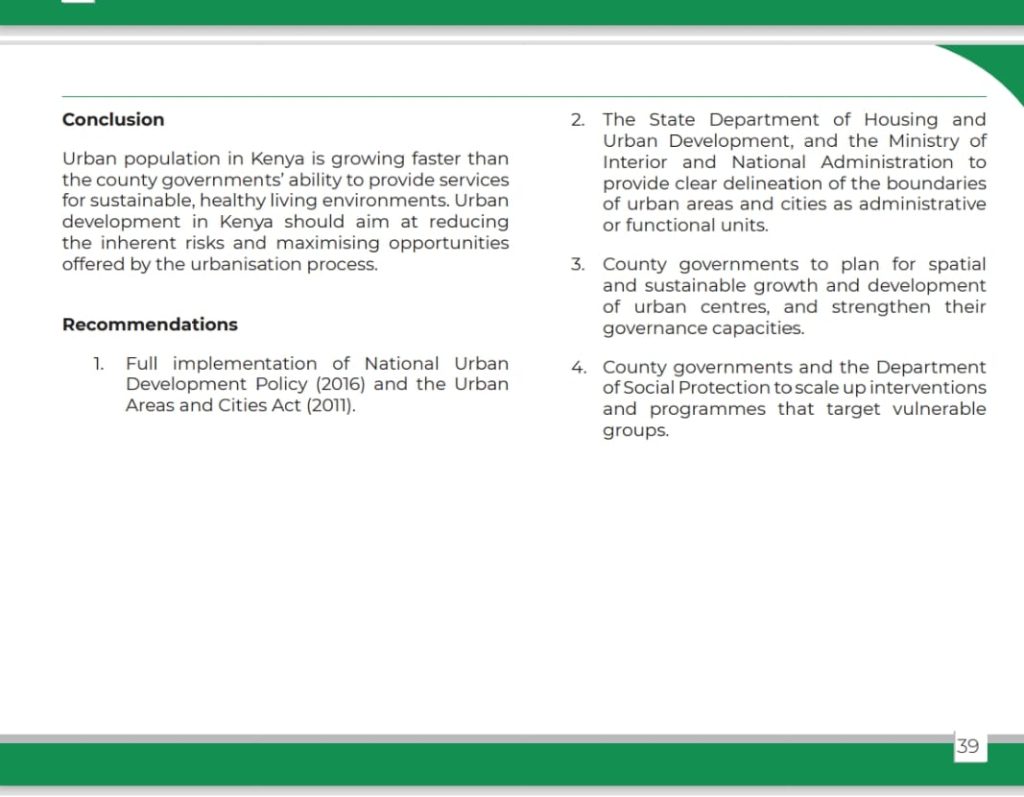
The report recommends the full implementation of the National Urban Development Policy and the Urban Areas and Cities Act.
It also calls for the clear delineation of urban areas and cities and urges county governments to plan for the spatial and sustainable growth of urban centres.
The recommendations point to the importance of planning before population growth overwhelms existing infrastructure.
Counties will need to think beyond the current needs of their towns and prepare for the number of people expected to live there in the next decade.
This will mean planning for roads, housing, water, sanitation, markets, public spaces and waste management before demand outstrips available services.
A test for devolution
Kenya’s growing urban population could become one of the biggest tests for county governments in the years ahead.
Devolution was meant to bring services closer to the people, But as towns expand and more Kenyans move into urban areas, county governments will have to prove that they can plan and deliver services at the same pace.













Leave a Reply