


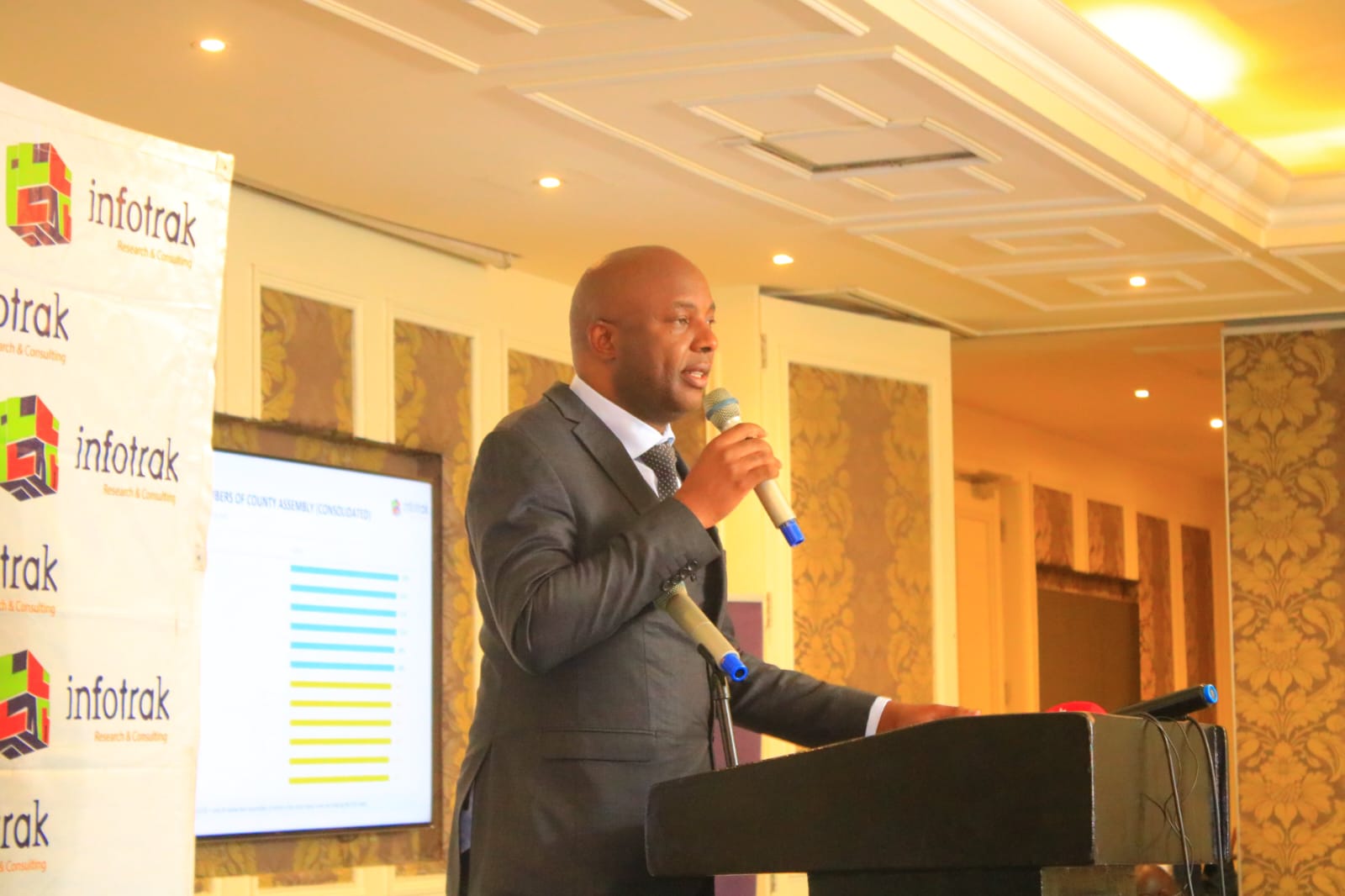
Murang’a Governor Irungu Kang’ata has been ranked Kenya’s best-performing governor in the 2026 CountyTrak Performance Index released by Infotrak Research and Consulting, with Kiambu Governor Kimani Wamatangi following closely behind.
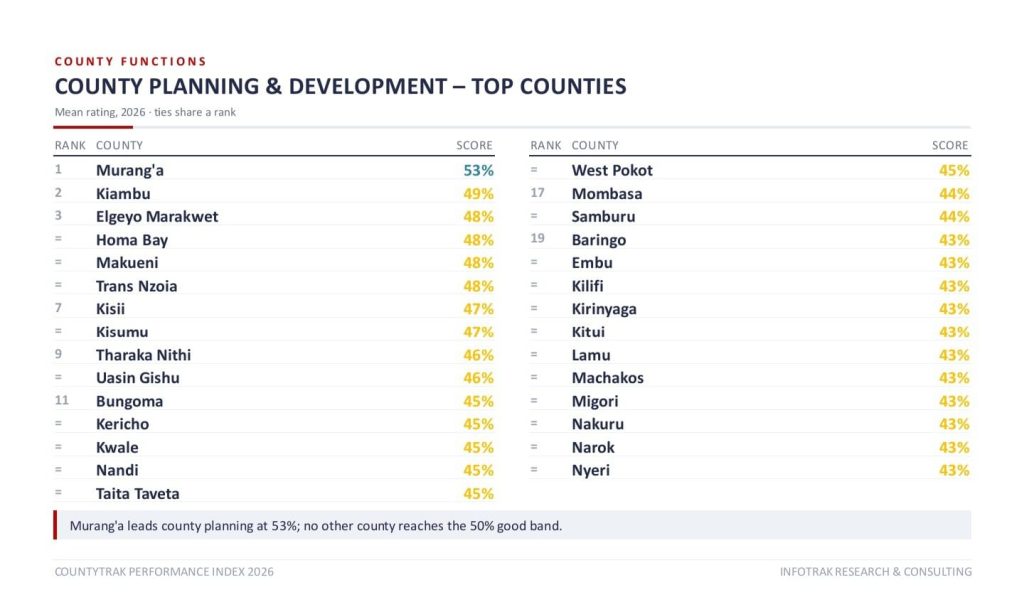
The survey, unveiled on Tuesday, August 4, assessed county governments on their delivery of devolved services, with Murang’a emerging as the highest-ranked county nationally after recording an overall score of 54 per cent. Kiambu came second with 52 per cent, while Trans Nzoia secured third place with 50 per cent.
The rankings evaluated county performance across several devolved functions, including health, agriculture, education, energy, environment and natural resources, housing, lands and settlement, water management, culture and sports, and social services.
Murang’a dominates key sectors
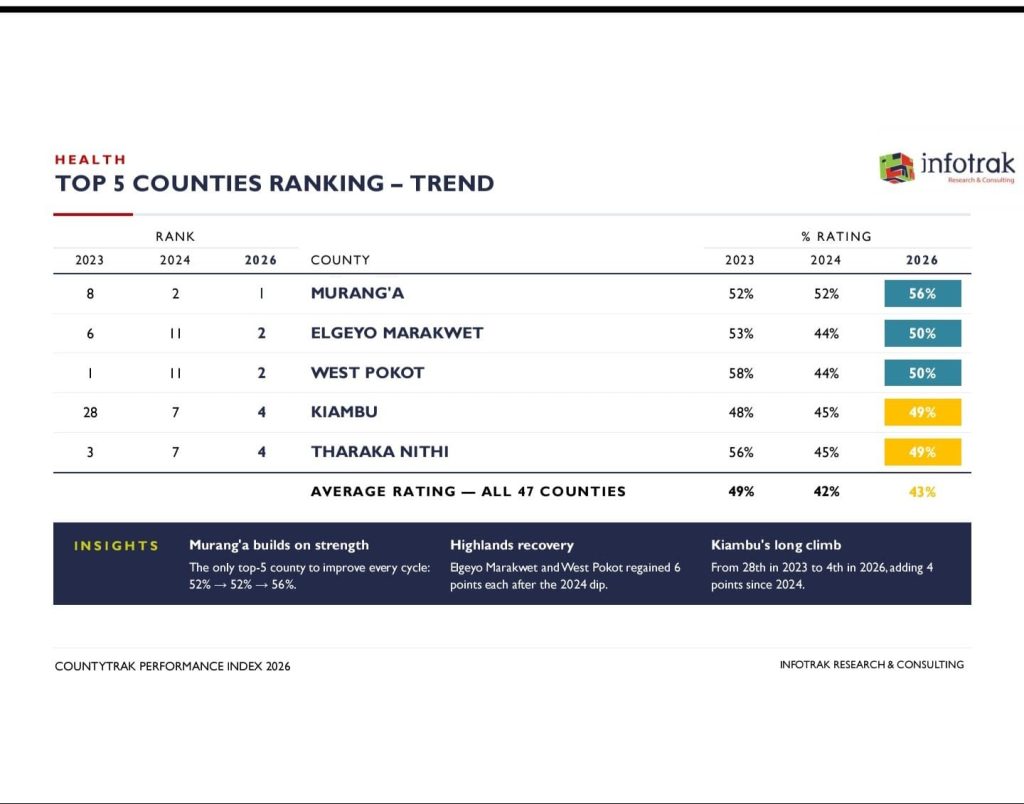
Murang’a stood out by leading the country in five sectors: health, housing, water management, culture and sports, and social services.
The county also shared the top position in environment and natural resources with Trans Nzoia, with both scoring 55 per cent.
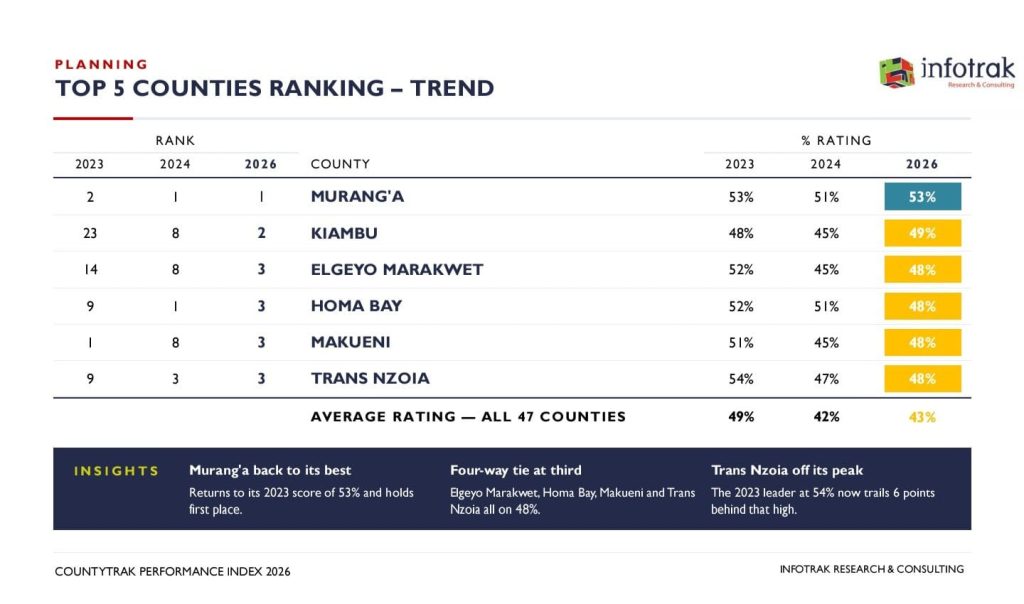
According to Infotrak, Murang’a’s strong performance has been driven by initiatives such as the digitisation of healthcare revenue collection and the Kang’ata Care medical insurance programme, which has expanded access to healthcare and reduced household medical costs.
Kiambu shines in education and energy
Kiambu posted the highest score nationally in the energy sector with 56 per cent, ahead of Murang’a’s 54 per cent. The county also emerged as the country’s top performer in education, reinforcing its reputation for investment in public services.
The strong showing by Murang’a and Kiambu highlights the growing influence of Mount Kenya counties in delivering devolved services.
Meanwhile, Trans Nzoia was recognised as the leading county for agricultural interventions, reflecting its continued investment in the sector.
Regional performance
Homa Bay was the highest-ranked county in the Nyanza region after tying for fourth place nationally alongside Elgeyo Marakwet, Kisii and Uasin Gishu, with each recording an overall score of 49 per cent.
In the mid-tier rankings, Elgeyo Marakwet Governor Wesley Rotich, Kisumu Governor Anyang’ Nyong’o and West Pokot Governor Simon Kachapin shared sixth place, each with an approval rating of 65 per cent.
Kisii Governor Simba Arati and Samburu Governor Jonathan Lelelit completed the top ten after tying in ninth place with 63 per cent.
Nairobi misses out
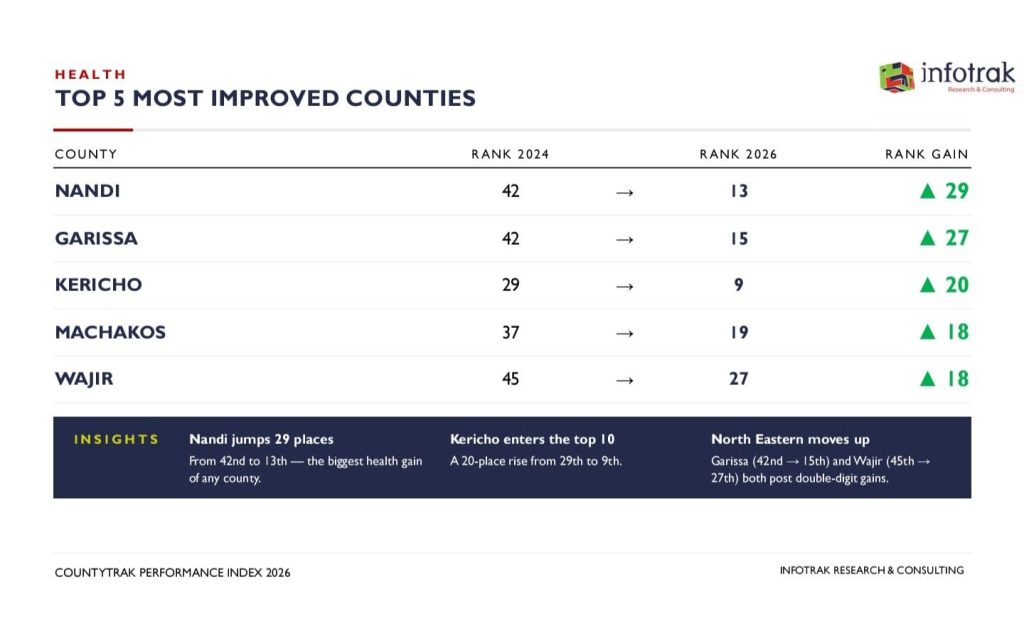
One of the notable findings was the absence of Nairobi Governor Johnson Sakaja from the list of top-performing governors.
Given Nairobi’s status as Kenya’s capital and largest county, the omission is likely to raise fresh questions over service delivery and governance in the city.
What determined the rankings?
infotrak said the rankings reflect how effectively county governments are fulfilling their constitutional responsibilities and improving residents’ quality of life.
The research also found that governors were largely assessed on their ability to deliver campaign promises, maintain transparency and accountability, and implement development projects.
Infotrak Research Director Angela Ambitho said citizens increasingly judge county leaders based on visible improvements in public services rather than political rhetoric.
The report further noted that counties with high recurrent expenditure, poor absorption of development budgets, unresolved pending bills and declining public services generally received lower ratings.
The CountyTrak Performance Index forms part of Infotrak’s annual assessment of governance across Kenya’s 47 counties, providing citizens and policymakers with an independent measure of county performance.
What the rankings mean
The latest CountyTrak Performance Index is more than a league table of governors. It offers a snapshot of how effectively county governments are delivering services that directly affect residents, from healthcare and education to agriculture, energy and water.
For governors, a strong showing provides independent recognition of their administration’s performance and may strengthen public confidence ahead of the 2027 General Election.
It also gives county leaders an opportunity to demonstrate that investments in development projects and public service reforms are producing measurable results.
For counties that ranked lower, the findings highlight areas that may require greater attention. Weak performance in service delivery, high recurrent expenditure and poor absorption of development funds could increase pressure on county administrations to improve efficiency and accountability.
The report also serves as a benchmarking tool, allowing counties to compare their performance with their peers and identify policies or programmes that have delivered positive outcomes elsewhere.
Successful initiatives, such as Murang’a’s healthcare reforms or Kiambu’s investment in education and energy, may provide useful lessons for other county governments.
For residents, the rankings offer an opportunity to assess whether their county government is meeting its constitutional obligations.
While public perception is only one measure of performance, the findings can help stimulate debate on governance, transparency and the quality of services delivered across the 47 counties.
Ultimately, the index reinforces the importance of devolution by highlighting where county governments are making progress and where improvements are still needed to ensure public resources translate into better services and improved living standards











Leave a Reply