

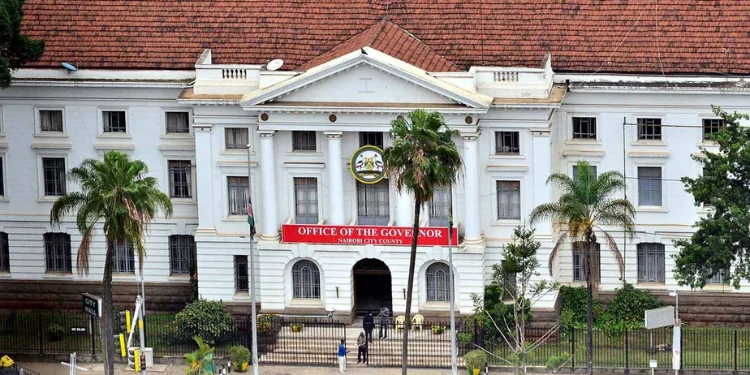
Nairobi City County has lost access to Sh5.7 billion in World Bank funding after failing to meet key governance and public financial management reforms, triggering renewed questions over accountability at City Hall.
Nairobi South B MCA Chege Waithera has demanded an immediate explanation from Governor Johnson Sakaja’s administration, saying the loss of the grant will undermine the county’s ability to finance essential services and development projects.
The funds were to be disbursed under the Second Kenya Devolution Support Programme (KDSP II), a World Bank-funded initiative that rewards counties which meet agreed benchmarks on governance, financial management and institutional reforms.
Governance targets that Nairobi failed to meet
According to the World Bank’s assessment, Nairobi did not achieve several performance indicators required to unlock the funding.
Among the key shortcomings was the county’s failure to implement an agreed plan to clear pending bills owed to suppliers and contractors. The report also cites weaknesses in revenue administration, delays in payroll reforms and inadequate measures to strengthen financial accountability.
The assessment suggests that the county’s shortcomings were not isolated administrative lapses but reflected broader weaknesses in governance and institutional management.
Pending bills remain a persistent challenge
One of the most significant concerns raised by the World Bank relates to Nairobi’s continued failure to resolve pending bills.
Despite repeated commitments to settle verified claims, suppliers and contractors continue to wait for payments for goods and services already delivered to the county.
The failure to implement a structured payment plan was among the factors that cost Nairobi access to the performance-based funding.Revenue collection falls below expectations
The report also raises concerns over Nairobi’s own-source revenue collection.
Although the capital has the largest revenue base of any county, it has consistently failed to achieve its collection targets.
Questions have also been raised over the transparency and efficiency of revenue administration systems, with analysts arguing that stronger collection mechanisms would reduce the county’s dependence on external funding.
Payroll reforms still incomplete
The World Bank further faulted Nairobi for failing to fully digitise its payroll management system.
The county has also not completed a comprehensive payroll audit and staff verification exercise, leaving unresolved concerns over payroll irregularities and the possible existence of ghost workers.
Oversight agencies have repeatedly recommended these reforms as a way of reducing waste and improving accountability in public spending.
MCA demands accountability
Waithera said the findings reinforce concerns that oversight institutions have raised for years regarding weak financial controls within City Hall.
” Losing Sh5.7 billion because of failures in governance, financial management and accountability cannot simply be ignored. Those responsible must be held accountable,” she said.
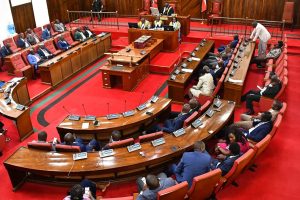
She wants the County Executive Committee Members responsible for Finance, Revenue, Public Service and the Office of the Governor to appear before the County Assembly and explain why the county failed to meet the agreed reform targets despite being aware of the conditions attached to the funding.
The MCA also questioned why previous commitments to clear pending bills, streamline payroll management and strengthen financial systems have yet to produce tangible results.
What the funding loss could mean for Nairobi
The loss of the Sh5.7 billion grant is expected to affect financing for several county programmes.
Among the sectors likely to feel the impact are urban infrastructure, healthcare, water services, environmental management and institutional capacity building, all of which rely on significant development financing.
The funding was intended not only to support projects but also to encourage counties to improve governance and financial management through performance-based incentives.
Pressure mounts on the Sakaja administration
The latest findings are likely to intensify scrutiny of Governor Sakaja’s administration, which has faced questions over procurement practices, revenue collection, expenditure management and implementation of financial reforms.
Waithera is now seeking a clear roadmap from the County Executive outlining how Nairobi intends to address the identified shortcomings, meet the World Bank’s reform benchmarks and qualify for future performance-based grants.
She argued that while development partners remain committed to supporting devolution, counties must demonstrate transparency, accountability and prudent management of public resources if they are to continue accessing such funding.