


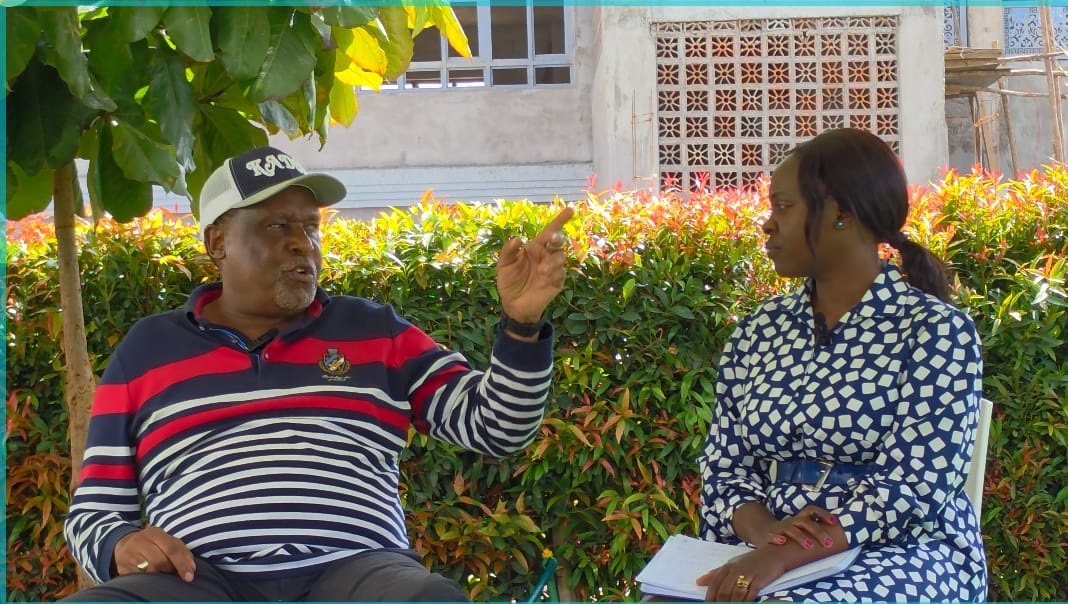
Sixteen years after Kenya promulgated the 2010 Constitution and entrenched devolution, Mihango MCA and Nairobi County Assembly Deputy Speaker Paul Kados says more power and resources need to move from county headquarters to the wards.
Kados wants Counties to establish revenue offices in every ward to make it easier for residents and elected leaders to track how much money is collected locally and how it is used.
Speaking to County Pulse News during reflections on the 16th anniversary of the promulgation of the Constitution on August 27, Kados argued that devolution should not end at the county headquarters.
He said ward level revenue offices would provide a clearer picture of the money generated in different parts of Nairobi and help residents link revenue collection to development in their neighbourhoods.
“Everything is stationed at City Hall…county revenue has never been devolved, we need revenue offices in wards kama huku kwangu Mihango,” Kados said, arguing that the county should devolve more functions and resources to the grassroots.
ALSO READ:Nakuru County to host International Day of Peace Celebrations
Power still concentrated at City Hall

Kados said the concentration of functions at the county headquarters has also affected the ability of technical officers to respond to problems in the wards.
He questioned the role of county chief officers, claiming they have limited authority to make decisions because County Executive Committee Members (CECMs) wield most of the power within the executive.
According to Kados, this arrangement leaves some officers without the resources or authority needed to address issues affecting residents.
“Chief officer in charge of Roads does not have a say…kazi ni kusoma newspapers pekee,”
He cited a street lighting problem in Mihango, where he said residents had gone for about five months without a functioning street light after one installation broke down.
Kados attributed the delay in repairs to limited resources available to county engineers, saying technical officers sometimes lack the budgets needed to undertake basic maintenance.
His argument raises a wider question about whether county governments have devolved enough operational capacity to the areas where services are actually delivered.
Who follows the money?
For Kados, devolving revenue would also strengthen accountability. Having revenue offices within wards, he said, would allow residents and their elected representatives to establish how much revenue is collected from their areas and follow what happens to those resources.
The proposal comes against the backdrop of a broader debate about whether the gains of devolution have translated into greater decision-making power at the grassroots.
While the Constitution created county governments, Kados believes Nairobi still operates with too much authority concentrated at the county headquarters.
The proposal could also provide an opportunity for Nairobi to develop ward level revenue and expenditure data, giving residents a clearer picture of the relationship between what their areas generate and the services they receive.
ALSO READ:Kenya turns to Blue Economy to unlock maritime wealth
MCAs and the struggle for financial independence
Kados also raised concerns about the ability of MCAs to effectively scrutinise the county executive when the Assembly itself does not have full financial independence. He said many MCAs struggle financially, making it difficult for them to carry out oversight of the executive effectively.
“MCA’s wameshindwa kuoversight because hawana chakula,…how can you oversight someone Who has a V8 na wewe mwenyewe hauna kitu,”
His concerns come after Parliament passed the County Public Finance Laws (Amendment) Act, 2025, which established a County Assembly Fund in each county.
The legislation was intended to strengthen the financial independence of county assemblies and provide resources for their administrative operations, reducing their dependence on county executives.
Nairobi MCAs had welcomed the legislation in 2025, arguing that financial independence was necessary for them to perform their constitutional oversight and legislative functions.
However, Kados says implementation remains a challenge, with governors and county executives still influencing access to resources meant for county assemblies.
The issue goes to the heart of the separation between the county executive and county assembly.
Under the Constitution, county assemblies are responsible for legislation and oversight of the county executive.
Kados argues that these responsibilities become difficult to discharge when an assembly does not have control over the resources required to perform them.
Deputy speaker role still needs clarity
Kados also used the discussion to raise questions about the position of county deputy speakers.
He said the role currently has limited clearly defined responsibilities, with deputy speakers largely chairing the Liaison Committee and working within the office of the Speaker.
“I am Deputy Speaker by name…..we need clear guidelines on this issue.….Kazi yangu ni chairing liaison Committee pekee,”
He wants the responsibilities of deputy speakers to be clearly defined so that the position has a more meaningful role within county assemblies.
The debate over deputy speakers has a legal history dating back several years.
In 2018, the High Court ruled in a case involving the Meru County Assembly that the creation and maintenance of a permanent deputy speaker position was inconsistent with the constitutional framework governing county assemblies.
The ruling triggered wider debate over the status and functions of deputy speakers in county assemblies.
For Kados, however, the issue is also about making the position useful within the day-to-day running of county assemblies.
Sixteen years of devolution
The Constitution was promulgated on August 27, 2010, ushering in Kenya’s current system of devolved government.
The system was designed to promote accountable exercise of power, enhance public participation and bring government services and resources closer to citizens.
Sixteen years on, Kados believes the next phase of devolution should focus on taking decision-making, revenue information and operational resources even closer to the people.
For Nairobi’s wards, that could mean knowing not only what the county government is planning, but also how much revenue is being collected within a particular area, who controls those resources and whether they are translating into functioning street lights, roads, markets and other services.
WATCH FULL VIDEO HERE.…https://youtu.be/GNvTF5rAEfQ?si=yZTGymfYrxG8jplf









Leave a Reply