



Makueni County has set itself a Sh843.3 million target in non-health own-source revenue (OSR), but members of the County Assembly are questioning whether Treasury can deliver on the ambitious projection.
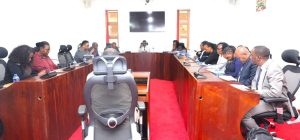
The concern emerged as the Assembly approved the County’s Sh13.84 billion Supplementary Budget for the 2026/27 financial year.
The revised budget projects Sh2.09 billion in total own-source revenue, accounting for about 15 per cent of the county’s total financing. Of this amount, Sh843.3 million is expected to come from non-health revenue sources.
ALSO READ: Nairobi’s parcel boom: How unregulated lorry operations are taking over CBD spaces

However, the Assembly’s Budget and Appropriations Committee raised concerns over the county’s previous revenue performance, warning that setting a higher target without clear collection strategies could leave a gap between what the county plans to spend and what it is able to raise.
The Assembly has now given the County Treasury 21 days to provide clear and actionable measures for improving revenue collection.
The scrutiny comes at a time when Makueni is relying heavily on funds from the national government to finance its programmes.
The approved supplementary budget expects Sh9.25 billion from the equitable share, representing nearly 67 per cent of the total budget.
A further Sh1.66 billion is expected from conditional allocations, loans and grants, while Sh835.3 million will come from unspent balances carried forward from the 2025/26 financial year.
Why the revenue target matters
For residents, the issue goes beyond whether the county meets a figure on a budget document.
If projected own-source revenue falls short, the county could face difficult choices over which programmes to fund, delay or scale back.
The Assembly has already pushed back against a proposal by the County Treasury to shelve some ward and headquarters projects, insisting that the projects should remain in the budget.
This means the county will have to balance its development commitments with the reality of how much money it can actually collect.
The supplementary budget allocates Sh5.67 billion, or 41 per cent, to development expenditure, while Sh8.14 billion or 59 per cent, is set aside for recurrent expenditure.
The development allocation is above the statutory minimum of 30 per cent, but the bigger question is whether the funds will be available when projects are due for implementation.
ALSO READ:Kikuyu Bus Park: Why is a completed facility still waiting to open?
What should residents watch?
The 21-day window given to the Treasury provides an opportunity to assess how Makueni intends to close the revenue gap and whether the proposed measures are realistic.
Key issues to watch include the county’s actual OSR collections compared with its previous targets, the revenue streams expected to generate the additional funds and whether the Treasury’s proposed measures can improve collection without placing an unnecessary burden on residents and businesses.
For Makueni residents, the real test of the Sh13.8 billion supplementary budget will not simply be its approval by the Assembly, It will be whether the county can raise the money it has projected, protect development spending and translate the budget into services and projects on the ground.







Leave a Reply